|
LONG BRANCH
Long
Branch is a second order tributary of Crawford Creek which
flows into Brasstown Creek in the Warne community.
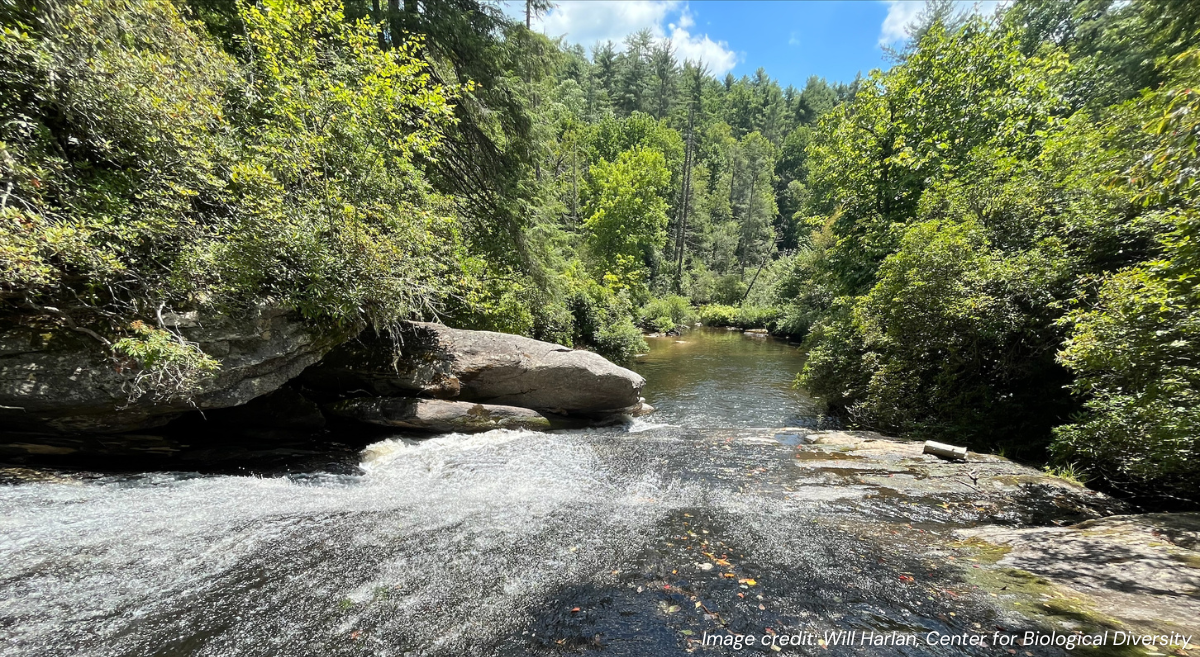
Long Branch is a relatively steep mountain stream that
drains the east side of Beach Mountain. The drainage
area is less than one square mile. Before restoring
the lower end of Long Branch along Don & Linda Anderson's
pasture (Long Branch 2 project), the Coalition recognized
the need to fix a severe problem upstream on Steve and Joyce Mulkey's property (Long Branch 1 project).
|
Project Design: EcoLogic
Associates, P.C.
Primary Contractor: Byers
Construction
|
LONG BRANCH 2
(2002)
|
|
Project
Background
Before restoration, the stream was severely incised and
unstable, stream banks were actively eroding and there was an inadequate
riparian buffer on the right bank. A road borders the stream on the
left bank, but as much riparian vegetation as could be expected was
present along most of this side between the stream and the road. More
than 100 acres of forest had recently been cleared in the headwaters of
Long Branch; and, HRWC and its partners worked with the landowners to
stabilize the areas and establish pasture through critical bare area
projects. In addition, a failed culvert upstream was replaced prior to
restoration. These events in the upstream watershed
were likely the primary causes of instability at this site; however, the
pasture use and inadequate buffer within the project reach also contributed.
Banks were sloped, cross vanes installed and bankfull
(floodplain) benches established to restore a more stable cross-sectional geometry and to help establish a good
riparian buffer. Native trees and shrubs were planted in the riparian
buffer; however, the newly sloped banks were rocky and soil conditions
were poor. A total of 475 linear feet of Long Branch was restored.
2008 Status
The entire restored reach at Long Branch was monitored in 2005, 2006 and
2007. The reach is moderately stable, with eight cross vanes
successfully holding grade. The stream continues to undergo aggradation,
as the channel evolves toward a stable dimension. Since 2005, most
structures show little or no change. Structures C and G noticeably
deteriorated between 2005 and 2007, but these changes have not directly
led to bank erosion or structure failure. The restored stream reach is
currently classified as a C4b channel. The streambed slope is 0.028
feet/foot, with a sinuosity of 1.03. Between 2005 and 2007, the
streambed material became significantly coarser, changing from a sand to
gravel bed stream. The median particle size in 2007 represents very
coarse gravel.
The restored reach
is dominated by riffles and runs and contains a few shallow pools. Many
of the cross vanes do not have associated scour pools. This straight
reach contains one significant (existing) meander bend, which does have
a pool. As a result of this tight meander bend and other very slight
bends, there are instances of high shear stress within the reach. Due
to well-vegetated banks and a low, wide floodplain, however, bank
erosion is largely
non-existent.
Vegetation in the buffer at Long Branch is patchy and some planted woody
material is unhealthy. While tree and shrub plantings do not appear
successful, the banks are well covered and natural regeneration creates
an exceptionally high stem count. Overall, the site appears much
better than could be predicted from its 2005 appearance, but is now
threatened by exotic invasives. A new fence was built in 2007, slightly
inside the planted buffer.
All three storm event samples obtained at Long Branch indicated that the
Total Suspended Solids concentrations were higher downstream of the
restored reach, with an average of 164%. This is attributed primarily
to runoff from the adjacent road.
Between 2005 and
2007, EPT taxa richness and the EPT abundance both increased.
3-Year Study
Recommendations
Recommended actions
at Long Branch include:
-
Removal
of the native but
invasive hog peanut, to improve tree health
-
Early removal
of kudzu and honeysuckle
-
Consider
removal of some
unhealthy trees and replace with better stock
-
Continue
to monitor in
subsequent years, with particular attention given to Structures C, G and
H and high shear stress areas
-
Evaluate
road runoff situation to determine if BMPs could be installed to reduce
TSS concentrations instream
|
Project Design: EcoLogic
Associates, P.C.
Primary Contractor: Byers
Construction
|
LONG BRANCH 1
(October 2001)
|
|
Conditions of Site Prior to Project
During a
high intensity rainfall event (3.5 inches in 45 minutes) in August of
2001, a four-foot diameter, corrugated, metal culvert, clogged with
woody debris, failed from overtopping. As a result, a section of gravel
driveway approximately 8-10 feet wide, upstream of the culvert, washed
out, leaving an exposed and badly eroding section of streambank. Long
Branch is a tributary to Crawford creek, which flows into Brasstown
Creek in the lower reaches of another Trust Fund Grant project (Warne
Project). Additional Trust Fund monies were being spent restoring two
badly eroding plots of land (Stiles and Hogsed projects) in the
headwaters of the Long Branch watershed. Work in this watershed was of
high priority to the Coalition because of the heavy contribution of
sediment coming from the critical areas in the headwaters and its
location in the Brasstown Creek watershed (immediately upstream of a
completed project). Also, another project, contiguous with the failed
culvert site, was being planned on the stream (Long Branch # 2, in
planning phase at this writing). Considering all these factors the
Coalition decided to spend grant monies to aide in the replacement of
this culvert and restoration of the eroding banks.
|
 |
 |
|
Before
Inadequate culvert size and
improper maintenance caused this driveway to blow out
leaving an eroding and unstable bank. |
After
Arched
culvert installed to accommodate a 10-year short duration
rainfall event.
|
Instream Technologies Applied
A corrugated metal
pipe (aluminized steel), with an 86-inch by 63-inch pipe arch, was
installed at the site. The structure satisfied NC DOT hydraulic
criteria for private drives and passed the criteria for the 10-year,
short duration storm, which was the type of high intensity storm that
caused the culvert failure. Banks adjacent to the pipe were properly
sloped and stabilized with filter fabric and Class B riprap. ABC stone
was spread and compacted on the driveway atop the culvert.
Linear Feet of Stream Restoration
Approximately 75 feet
Linear Feet of Riparian Buffer Restored and/or Protected
Approximately 150 feet
Buffer Vegetation
Due to the linear
limits and nature of this project, little riparian restoration was
called for.
|